- Hey Mike
- Posts
- Inside the studio behind Chance the Rapper, Ravyn Lenae, & more
Inside the studio behind Chance the Rapper, Ravyn Lenae, & more
How Chris Classick built Classick Studios.

Mike Epstein
January 15, 2026
Hi,
While so much of the music industry highlights artists and their managers, there is usually little said about engineers and their contributions behind the scenes. In a way, engineers have become some of the unsung heroes that help the music industry go-round with how rarely they are mentioned.
In an effort to shine light on those contributing to the creative community, I checked in for a conversation with Chris Classick, founder of Classick Studios in Chicago. The conversation ended up sharing a lot of interesting perspectives that apply to artists and creators everywhere.
Let’s explore below.
This newsletter highlights:
Chris Classick interview
The Vault
B-Sides
Industry spotlight
10 music industry job opportunities
Let’s dive in ⬇️
I’ve been familiar with Chris and Classick Studios for a while. In the mid 2010’s, his studio was a hub for the emerging class of Chicago hip-hop stars that broke through to national stardom. This group included Chance the Rapper, Noname, Vic Mensa, Mick Jenkins, and more.
Classick Studios was in many ways, a home to that movement and helped empower those artists and projects.
Building Classick Studios and the Chicago Movement
I was curious about the early days of the studio and how Chris founded it.
Before Classick Studios moved into the building at 2950 West Chicago in 2012, Chris rented out an entire house. There was a studio in the basement, production suite on the first floor, and a living space upstairs where he and other creatives - videographers, producers, and artists - all lived and worked together.
For a while, he was trying to be everything at once. The multifaceted record label, the developer, the incubator. But at some point, he realized he needed to focus and had a meeting with everyone where he told them:
"I'm gonna just concentrate on being an engineer.
I wanted to cultivate the sound from a producer and engineer's standpoint, which I think at that time was valuable in Chicago, given how many artists were coming out of the city and making noise. We just wanted to be able to help service that from a quality standpoint."
Shortly after launching the studio, Chris found himself at the center of what would become game-changing projects, starting with Chance the Rapper’s “Acid Rap”.
He explained that being a staple studio in Chicago meant they recorded everyone - every side of the city, every artist, producer, promoter.
"Everyone went up to me and told me, 'Hey, have you heard about this kid, Chance?
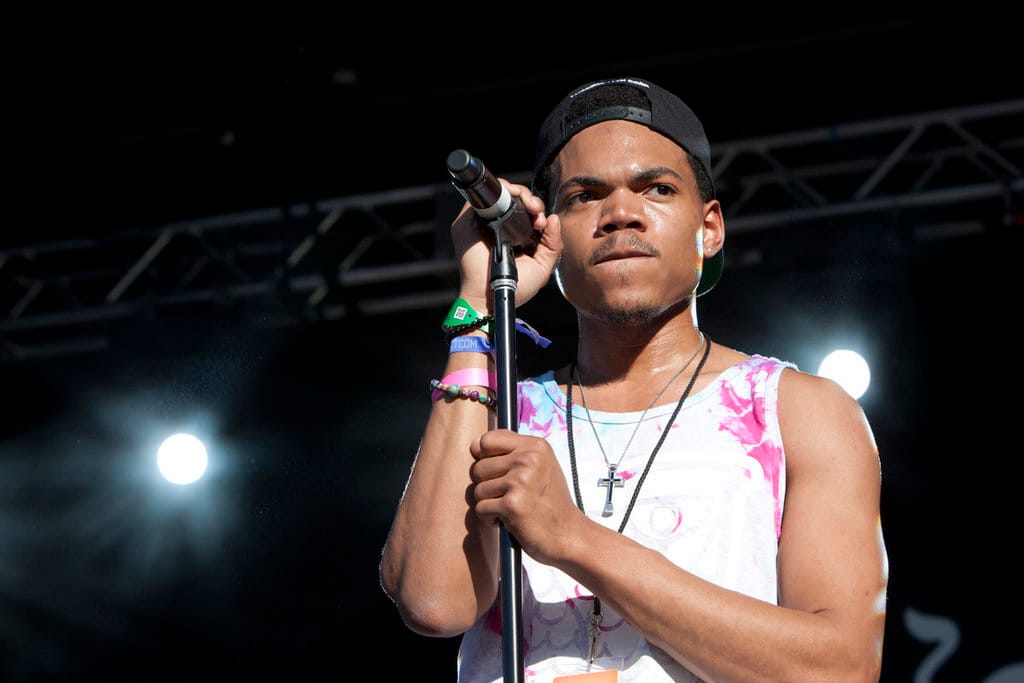
I knew that when that project dropped, Chance was gonna move the culture 100%. But it was also gonna help Chicago's music scene and the creative community. I was 100% excited for him, but just to see everyone who came after - Noname, Saba, Mick, Smino, Monty, Phoelix, FemDot, theMIND… It was incredible. That was a crazy era."
Behind the Scenes: The Barbershop Model
One of the things I’m most fascinated about with creative entrepreneurs is how they think about and approach the business side of their operation. How do they map out the economics?
I asked Chris how he actually kept the studio running during all of this…most people don't think about the business side of a studio - they see the sessions, the artists, the projects, etc but they don't see the invoices, the scheduling, the systems that keep the lights on.
Chris worked off a model he calls "the barbershop."
"I kind of treated my studio like a barbershop…instead of charging artists a flat room rate - which at other studios in Chicago was running $80-$100 per hour I implemented a percentage-based split with my engineers.
If I'm an engineer trying to make a living off of this, I'd have to charge my client $125 just to make $25. So instead, I implemented a percentage base.
Here's how it works: engineers could dictate their own rates with clients. Starting out, they might charge $40 an hour and split it 50-50—$20 to the studio, $20 to them. But as they grew their clientele, the split would change in their favor.
I have engineers right now who do 30% to the studio, 70% for them. So they're making $65 an hour versus the studio making $25. And that's perfectly fine for me. If we're making a minimum of $25-$30 an hour, we're keeping our lights on."
What I love about this is that it's deeper than just the money…Chris was teaching them how to be entrepreneurs.
"I was implementing the mindset of how to be an entrepreneur while being an engineer and building their business."
Mental Health and Late Sessions: The Zero Fatigue Story
I’m also fascinated by how artists, creators, and creative professionals in general prioritize and protect their wellness and energy. The entertainment industry is chaotic and stressful and I’m always curious how people think about their well-being.
Artists in hip-hop are known for working late sessions hours (middle of the night sessions aren't uncommon). Out of curiosity, I asked Chris how he protected his own mental health, body, and sleep over the years.
Now, he delegates. He has 10-13 engineers who gladly take the midnight to 6 a.m. sessions. But it wasn't always like this.
"Before, it was 60 hours a week and non stop late nights. Now it’s different.”
Chris is a father and a husband. He stops work at 5 p.m., picks up his son Myles, handles dinner, and has family time. He also does something that's become therapeutic for him: morning mixes.
Now engineers come in and record artists at night, and Chris mixes it the next morning during his solo sessions.
"It doesn't even feel like I'm getting paid. I love mixing so much."
While telling me all of this, Chris blew me away with another story (sidenote: I’m super late to the party here so don’t use it against me lol). He told me the story of how Smino & Monty Booker became Zero Fatigue.
“They were called Zero Fatigue because they were like, 'Yo, we don't get tired.' They would sleep during the day so they could wake up at 2 a.m. to record and go until like 10am."

What I thought was dope is while Chris ran the studio like a business, his love of music + the art came first. He gave so many of the early artists free studio time in those days.
When Ravyn Lenae came to the studio at 16 years old, Chris heard one song and gave her free studio time for life.
“It was just too good. When it's undeniable, you don't even question it. You're not in your head anymore, you're in your heart, and you're like, 'Okay yeah, this is crazy.'"
Session Dynamics: Capturing Lightning in a Bottle
In addition to economics and wellness, I’m also curious how creative professionals approach social dynamics - for example, how do engineers handle a session where maybe them and the artist don’t get along or don’t see eye to eye?
"I look at it from a perspective of, like, you're not gonna be for everybody. It doesn't hurt my feelings if I'm like, maybe I'm not the right engineer for this. Maybe you need someone who's more in the DIY scene. Maybe you need an engineer that grew up only on R&B. Maybe you need an engineer that grew up in the church."
I thought this part was fire - apparently when clients hit up Classick to work, the studio asks for their music and their Instagram to understand the vibe and what the artist sounds like in an effort to pair them with the right engineer.
"We try to make it where it's like, 'Hey, we are here for you. We will help you with your sound. But the most important thing is, what do you need right now that we can help you with?'"
Mistakes Artists Make in the Studio
I was also curious if Chris had suggestions for tactical best practices or mistakes he sees artists make in the studio:
Preparation
"The first thing is preparation," he said. "Not being able to just pull up and not having all the things that they need to allow the session to be smooth. Making sure the files are there, making sure… I actually guide them through this before they even show up."
He tells clients to send him the song they want to get mixed, or all the beats, ahead of time:
"So I could listen to them, vibe, get an idea, so I could help the artist a little bit more than just going in there, not feeling prepared."
Rushing
The second mistake is also interesting…
"Not giving the engineer ample time to work. I get it, you're trying to fit 100 songs in 2 hours. Totally understandable. But giving the engineer ample time to mix - they're trying to mix songs in 5 minutes, and then they leave, and they're like, 'Man, this doesn’t sound right…' You gave me 5 minutes."
Letting it flow
The third mistake is the one that stood out to me the most:
"I think artists right now are treating sessions too much like a fucking doctor's appointment and now we're getting a lot of stiff music.
Artists are rushing - let's get this done so I can drop this tomorrow, because I'm gonna worry about my content tomorrow. They're watching the clock because they're paying, trying to get as much done as possible.
I get it. Totally understand. But here's the thing: allowing the space to capture lightning in a bottle comes from not putting pressure on things.
The sessions that result in goosebumps, in music that makes you feel something, those are the ones where artists book 6-12 hours, where we’re talking before the session, getting to know each other.
Remember, we're recording a time.
It's a timestamp of an accumulation of experiences that you've gone through, and you're putting it into 3 minutes of a song.
Whatever you're recording, those emotions, how you felt, are gonna be felt on the other side."
This concept was so simple to me yet so important - it was honestly kind of a “duh” moment lol. So many artists try and rush their sessions, and understandably so. They work hard for their money and don’t have an unlimited amount for endless sessions. That said, adding pressure to try and finish as much as possible puts a strain on the creative juices and can actually impact the creative input. It’s an interesting concept to be mindful of - there’s definitely a balance between trying to make good use of your time while also letting things flow. This can also apply to photoshoots, videoshoots, and more.
Overall
This conversation came at the perfect time - without me even realizing it, 2026 marks the 20-year anniversary of Classick Studios. To celebrate, Chris has some programming and activations in the works later this year (we’ll keep it a secret for now though).
When reflecting on everything he’s done, Chris mentioned:
"I don't call it a recording studio…I call it a development studio because you're developing your sound, you're developing yourself, you're developing the ideas that you have. It's an open space where what you said earlier about me being an open book - I don't take things personally because ego is the biggest thing that can get in the way of anyone's careers. You gotta know when to turn it on. But when you're in a creative mode, you gotta let yourself roam free. Let yourself get to these little spaces that you didn't know you could go into."
This conversation was full of takeaways for me, especially the best practices for studio time (which truthfully can also apply to any type of creator).
As a thank you for reading - Chris is offering one free mix/master to a random artist who reads this. You can apply here.
Follow Chris on Instagram: @chrisclassick Follow Classic Studios: @classickstudios
Hopefully this was helpful on your journey.
Thanks for reading, until next time.
The Vault
1) Emergent - my cousin actually introduced me to this one! It’s similiar to Lovable, a platform that can be used for building web applications with AI but Emergent has more integrations. For example, it recently just integrated with Claude Sonnet 4.5 More info HERE
B-Sides
⚡ SUNO inks massive licensing deal HERE
⚡ YouTube adds AI prompting to year end recap HERE
What I’m listening to…
Industry spotlight
These industry professionals are looking for open roles:
⚡ Derek Spence - Los Angeles, CA: "I’m an audio engineer with extensive experience recording, mixing, and managing sessions at top studios like Record Plant, Harbor Studios, and Craft Studios. I bring a mix of technical expertise, creativity, and client-focused workflow, making sure the artist’s visions come to life. I’m looking for recording and mixing engineer roles.” - LinkedIn
If you’ve been impacted by layoffs and are looking for an open role in the music or entertainment industry, submit for a chance to be featured in the Industry Spotlight section HERE
Music industry job opportunities
1) Digital Rights & Content Operations Coordinator – Rebel Creator Services
Salary: $30,000 - $40,000
Location: Remote
Apply HERE
2) Social Media Strategy and Digital Advertising Coordinator/Manager - Mascot Records
Salary: $40,000 - $60,000
Location: New York, NY
Apply HERE
3) Administrative Assistant/Junior Agent - Dynamic Talent International
Salary: $42,000
Location: Nashville, TN
Apply HERE
4) Music Project Manager / Label Liaison - HYBE America
Salary: $175,000 to $225,000
Location: Santa Monica, CA
Apply HERE
5) Social Media Editor - Music - Future
Salary: £29,000 - £35,000
Location: London, UK / Bath, UK
Apply HERE
6) Marketing Coordinator - MiEntertainment Group
Salary: $40,000–$50,000
Location: Michigan
Apply HERE
7) Director of Music - Aspect
Salary: $150,000 - $200,000
Location: Los Angeles, CA
Apply HERE
8) Brand Manager - Audiio
Salary: Unlisted
Location: Nashville, TN
Apply HERE
9) A&R Coordinator - Warner Music Group
Salary: Unlisted
Location: Nashville, TN
Apply HERE
10) Senior Financial Analyst, Film Production & Music - NBCUniversal
Salary: $80,000 - $92,000
Location: Universal City, CA
Apply HERE
What'd you think of this week's newsletter?Your feedback goes a long way. |
Reply